Deposition: The Silent Geological Process Shaping Earth’s Surface
Deposition: The Silent Geological Process Shaping Earth’s Surface
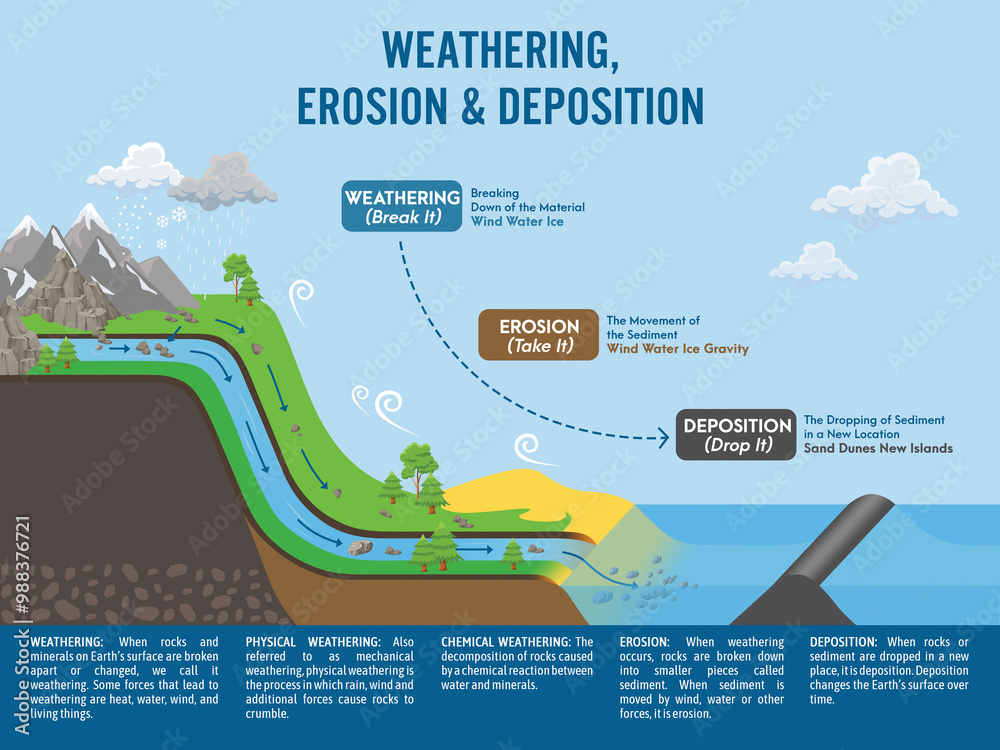
Deposition—the scientific process by which eroded materials settle and accumulate in new locations—is a fundamental mechanism in geological and environmental science. Far from being passive, deposition drives landscape evolution, builds fertile soils, shapes coastal ecosystems, and even preserves critical records of Earth’s history. Defined precisely as the accumulation of sediments, minerals, or organic matter from transport by wind, water, ice, or gravity, deposition transforms loose particles into solid deposits that define the planet’s surface over time.
<As energy diminishes, materials settle according to their physical characteristics: larger, denser particles deposit first, while finer grains like silt and clay travel farther before settling. This sorting process, known as selective deposition, creates layered strata with predictable patterns. For instance, river deltas showcase graded bedding where coarser sediments form the base and finer materials settle toward the edges, reflecting dynamic flow conditions.
“Deposition is not merely the final step in erosion—it is the architect of stratelines, soils, and entire landforms,” explains sedimentologist Dr. Elena Rostova. “It records environmental shifts, acts as a carbon sink, and supports biodiversity by forming nutrient-rich substrates.” <
Over time, these deposits build fertile plains vital for agriculture. - *Aeolian environments*: Wind-driven sand and silt accumulate in dune fields and loess deposits, widely distributed across continents like the American Great Plains. - *Marine settings*: Coastal and offshore deposition builds beaches, barrier islands, and submarine fans, often preserved in sediment cores that reveal climate change over millennia.
- *Glacial landscapes*: Moraines and outwash plains form from glacial meltwater, depositing a mix of boulders, sand, and fine minerals. Relentless wave action and tidal currents sort sediments into rhythmic layers, revealing cycles of sea level and storm intensity that span millions of years. <
Sedimentary basins act as

Related Post

London Ibus Hyperion: Redefining Business Travel with Cutting-Edge Transit Innovation

Unlock Math Magic: Mastering Tricky Ball Addition for Smarter Learning

Experience The Excitement Of Methstreams Boxing: A Comprehensive Guide on a Phenomenon Redefining Modern Combat Style

Reset Your Apple ID Password Without Ever Touching Your Phone via Iforgotapple.com


